How to:
Install Larger ATV Tires
Before You Install: What to Know About Larger Tires
We all know the saying, "Bigger is better." That's not always the case, though, even when it comes to ATV tires. There are certain situations (deep mud or snow and extremely uneven terrain) where the added clearance is extremely beneficial, but other than that, the gains are mostly just cosmetic. If the ground clearance and looks are what you're after, you need to make sure that your ATV can handle the stresses of larger tires. If it can, you also need to consider the modifications that you would need to make to your ATV to accommodate the taller and heavier tires.

Oversize ATV tires are generally much heavier than the tires that come stock on your ATV. This fact is often overlooked, but shouldn't be because they will put plenty of extra stress on many other components on your ATV. The extra weight and height of the tire will affect your ATV's performance. Below are the issues that you need to take into consideration before deciding to install oversized tires your ATV.
Gearing/Low End Torque/Clutch
The taller the tire that you install on your ATV, the higher the gear ratio will become. Larger tires will also have a larger rotating mass due to the increase in weight. Both of these issues will result in a loss of low end torque. Your engine will have to strain harder to get the wheels rolling at the start. Your ability to spin the tires in mud will also be diminished.
To fix this, you will need to do a gear reduction and/or install a clutch kit designed to provide more low-end torque. The gear reduction will allow the wheels to spin faster, while the clutch kit will allow the engine to rev higher before engaging. While this setup helps with mud performance, you will lose top-end speed. If speed is your priority, this setup may not be ideal.
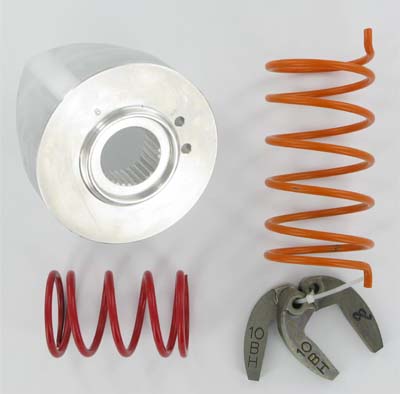
Low End Acceleration
As mentioned above, the larger rotating mass and increased gearing will make it more difficult to get the wheels to turn at the start. If getting off the line faster than everyone else is your top concern, you might want to actually consider going down in size from your stock tires. The smaller tire is easier to turn and reduces your gearing for fast acceleration. If you absolutely want those larger tires, you will need to reduce the gear sizing and install a clutch kit for faster acceleration.
Added Stress to Drivetrain and Suspension

The stock drivetrain and suspension components of most ATV's are not built to withstand the extra stress that the heavier oversized tires put on them. The added stress will accelerate the wear on these components and lead to failure much faster than a stock set-up. To avoid this, you may want to consider installing heavy-duty axles, CV joints, shocks and other drivetrain and suspension components.
Raised Center of Gravity/Poor Handling
The main purpose of installing larger tires on your ATV is to lift it higher for more ground clearance. With the chassis raised, so is the center of gravity. This will make your ATV more unstable while going through corners. The increased weight and height of the tires will also reduce the turning radius and make the ATV more difficult to steer. With larger tires, your trail riding capabilities are usually impacted negatively.
May Void Manufacturer's Warranty
Because of all the issues listed above, many manufacturers do not allow you to dramatically change the tire size on your ATV without voiding the warranty. Every manufacturer and dealer is different so it is important that you check with them before making this change. If your warranty is up or if you just don't care, the choice is then up to you.
Modifying Your ATV to Make the Change to Larger Tires
If you have taken all the factors above into consideration and you still want to install larger ATV tires, read on. Depending on your ATV and how large you would like to go with your new tires, you may have to make a few modifications to accommodate the larger tire. These mods include lift kits, wheel spacers and heavy duty suspension and drivetrain components. With that said, a small increase in size may not require any modifications at all.
When No Mods Are Necessary
If all you are looking for is a slight increase in ground clearance, you may not have to make any modifications at all depending on your ATV. Generally, ATV manufacturers leave enough space to go up at least one size and maybe two sizes in tires without the risk of rubbing on plastics, shocks or exhausts. Whether you can go up two sizes without modifications is largely in part reliant on the engine size of your ATV. If your ATV is under 500cc, it's recommended that you only go up one tire size without modifications. ATV's that are over 500cc can sometimes handle a tire that is two sizes larger than stock.
Lift Kits
When you want to go with even larger ATV tires, you will need to start modifying your machine. The first thing that you will need to look at is a suspension lift kit. A lift kit will raise the suspension higher to provide more room for the tire to fit underneath. It will also give you even more ground clearance in addition the clearance gained from the larger tires. The size of lift kit that you install depends on just how big of tires that you want. With a larger machine, the sky really is the limit if you are willing to invest in the heavy duty components to support the lift kit and added weight of the larger tires.
Wheel Spacers
ATV wheel spacers aren't just for wider tires. They are often beneficial for taller tires as well. The larger diameter of the tire makes it more susceptible to rubbing while turning. The wheel spacer can extend the wheel further from the shocks, struts and exhaust for proper clearance.
ATV wheel spacers can also help make your ATV more stable. With the added ground clearance, the center of gravity is also raised, making the machine more susceptible to tipping. With the wheels spaced wider, the weight of the ATV is dispersed more evenly, which makes it more stable in corners. This effect can also be accomplished by adjusting the offset of your ATV wheel, but that does need to be done carefully.
Heavy Duty Suspension and Drivetrain Components
With all the extra weight of a larger tire and the increased angles from the added height, there is a lot of extra stress being put on the drivetrain and suspension. It is a good idea to upgrade these components including axles, CV joints and shocks to help prevent accelerated wear caused by the increase in stress. Without an upgrade, these components will wear out much faster and can even fail with too much stress.
How to Install ATV Tires
What You Need to Install ATV Tires
Installing ATV tires at home is a straightforward process, but having the right tools makes the job much easier and helps prevent damage to your wheels and tires. Proper ATV tire installation tools allow you to safely remove old tires and mount new ones without fighting the bead or risking injury.
Essential ATV tire installation tools include tire irons or spoons, a bead breaker, an air compressor, a valve core remover, soapy water or tire lube, and a torque wrench.
Step-by-Step ATV Tire Installation
- Place the ATV on jack stands so the wheels are off the ground and the machine is stable.
- Remove the wheels from the ATV.
- Deflate the tires completely by removing the valve core.
- Use a bead breaker to separate the tire bead from the rim.
- Remove the old tire from the wheel.
- Lubricate the rim and the new tire bead with soapy water or tire lube.
- Mount the new tire onto the rim.
- Inflate the tire until the bead seats properly.
- Reinstall the wheels on the ATV and torque them to the manufacturer's specifications.
Recap: Consider the Pros & Cons of Larger ATV Tires
Installing larger ATV tires can improve ground clearance and traction in deep mud, snow, and rough terrain, but it also comes with trade-offs. Heavier and taller tires affect gearing, acceleration, handling, and drivetrain stress, and they often require supporting modifications like clutch kits, lift kits, wheel spacers, and heavy-duty components to perform correctly.
Before upgrading, it is important to balance the performance gains you want with the mechanical impact on your ATV. Choosing the right tire size and making the necessary supporting upgrades will help ensure that larger tires improve your riding experience instead of creating reliability or handling problems.
Remember that these are just recommendations. Each individual rider and every model of ATV is different and may require less or additional modifications to run larger ATV tires effectively.
Shop ATV Tires & Tools![Bizrate Circle of Excellence - See [Merchant Name] Reviews at bizratesurveys.com](https://medals.bizrate.com/awards/vertical/medium/28065_coe.gif)